

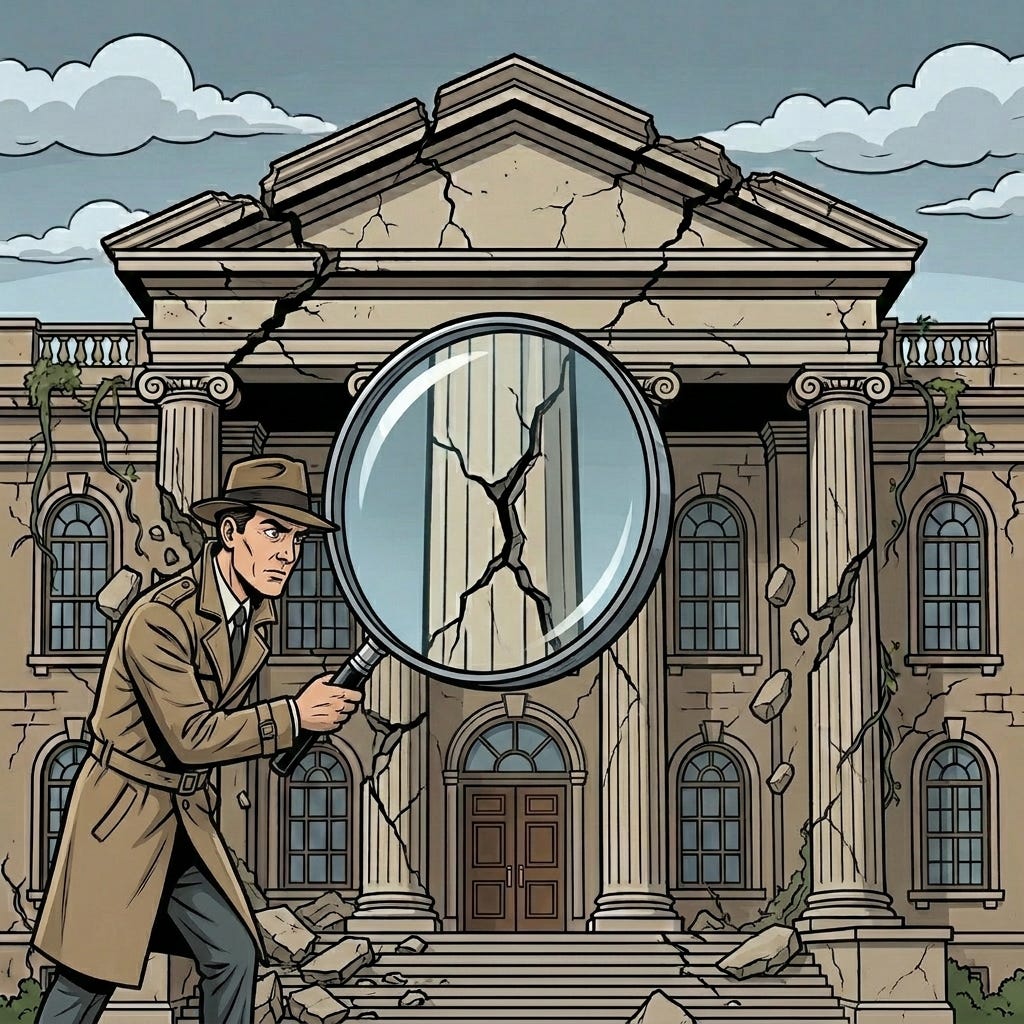
Do real estate industry organizations actually represent the members?
It is hard to overestimate the importance of the organized real estate institutions, which include REALTOR® Associations at three levels (local, state and national) plus the MLS services, run as either regional corporations or Associations’ departments
Aside from commanding a powerful lobbying resource for private property rights, Associations and MLSes set professional standards for real estate practice, including how the market functions. This is part 2 of Real Estate Futures Blueprint intro series:
The Governance Audit: Study of Systemic Flaws 👉 you are here
Let’s dive in and shine the light on the core flaws with our industry governance!
A Little History: How Did We Get Here?
The modern organized real estate system was created in year 1974, when the national and state associations opened their doors to non-broker salespersons, transforming exclusive clubs of local brokers into a mass membership organization
This shift was a financial masterstroke that created an unmatched legislative war chest and the new heavyweight political power, led by RPAC. However, this change fundamentally altered the genetic makeup of the organization. A voluntary professional society transformed into a mandatory public utility through tying access to the vital Multiple Listing Service (MLS) to association membership
A massive population of active, street-level professionals became captive dues-payers with little to no say in decision-making. This created a profound disconnect between the people who fund the machine and the small group that operates it
A Legal Context: Membership Non-Profit Rights
Legally and structurally, our associations are membership non-profit corporations chartered to serve the collective benefit of their members. The state laws that govern these entities vest incredible, unexercised powers directly in the hands of the rank-and-file members - rights of transparency, direct input, and collaborative oversight
Our practical reality is quite different however. The de facto governance of organized real estate flows top-down with Boards, steered by Officers, picking Nominating Committees which in turn pick Boards and Officers. This creates self-perpetuating insider elite focused on advancing own agendas and preferences rather than truly serving the members. When independent voices highlight the system’s flaws, the immediate reaction of the in-group rulers is to silence the critics
True to the spirit of corporate non-profit codes, the policy-making powers in our industry at every level should belong to licensed practitioners who serve clients every day, rather than top-down institutional structures that lack members’ mandate and tend to prioritize performative displays over transparency and accountability
A Legacy of Missteps: Top-Down Governance Failures
This structural detachment explains why organized real estate is repeatedly blindsided by catastrophic litigation and constantly fumbles technological trends
With organization’s leadership chosen through a closed-loop committee ecosystem, that rewards tenure, loyalty, and unquestioning protocol compliance over genuine expertise, dangerous group-think fills the echo chambers. Status quo is treated as immutable law and independent voices raising concerns about need to adapt to the changing world are treated as a nuisance rather than an early warning system
These exact institutional blind spots led directly to the multi-billion-dollar antitrust setbacks that have shaken our industry. The bureaucracy, sheltered by its historical political influence, consistently assumed that legislative access can shield it from judicial reality. The self-congratulatory in-group culture creates the bubble of comfort, where everyone chooses to ignore problems till they blow up in the open
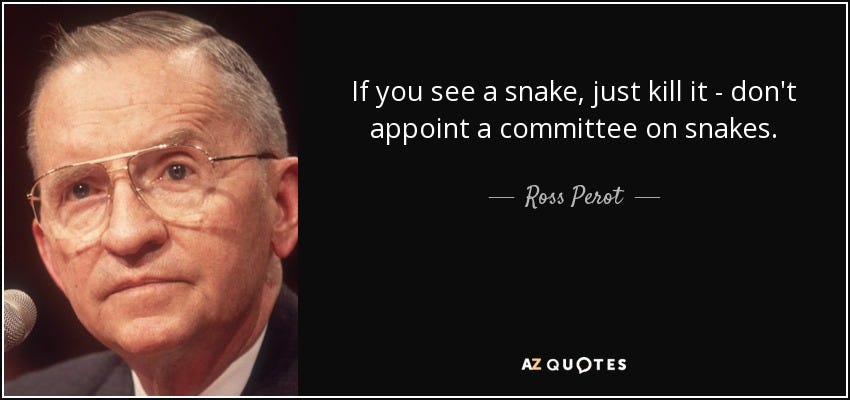
Let’s heed the wisdom of Ross Perot on dealing with bureaucracy bloat
A Clear & Present Danger: Agentic AI Disruption
The ongoing AI technology tsunami wave, well explained in Stanford’s 2026 AI Index Report is the latest trend being mishandled by our industry institutions. While I expand on details of the subject matter in Part 3 of this intro series, in this section I’ll just briefly spotlight the ongoing organizational failures
At the recent 2026 CAR Spring Meetings in Sacramento during the Strategic Planning and Finance (SPF) Forum, the leadership presented their AI roadmap crafted by a corporate tech consultant. In a glaring example of misinformed policy-making, the consultant explicitly told attendees that helping a seller price a home competitively will no longer differentiate an agent because “AI pricing tools are fast and free”
The SPF Committee that hired this consultant and approved the presentation sat through this and did not push back with a reasoned advocacy for human element. They allowed a consultant without hands-on fiduciary experience to blithely concede wide swaths of the professionals’ job description to algorithms
When I publicly asked the SPF Chair how such a small panel could possibly cover every angle of AI disruption without engaging all members, I received no substantive answer beside mere acknowledgment that SPF Committee is small
Will our industry survive Agentic AI disruption with this kind of leadership?
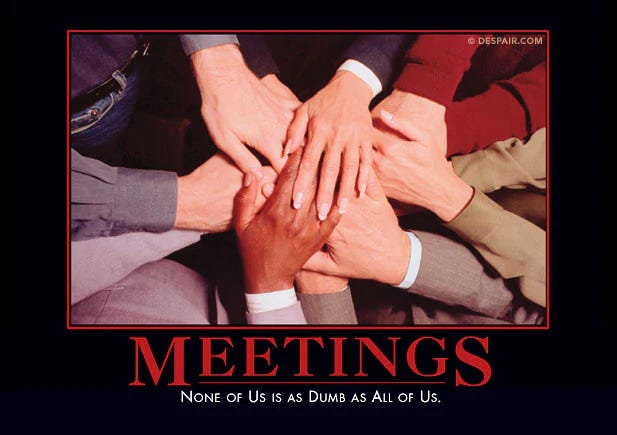
A Move Underway: CAR Orders a Governance Review
Surely it is a pure coincidence that just a few months after I challenged my committee suspension and physical ban at Monterey meeting CAR Officers proposed and CAR Board approved a comprehensive Governance Review at Sacramento meeting
What is truly remarkable is that (as CAR Leadership stated) this is the first CAR governance review since 1990. This means no one in power (until now) has even questioned whether it is appropriate to run the largest State REALTOR® Association by the processes created before Internet, mobile phones, and let alone AI. While I am glad that CAR Leadership tacitly acknowledged that the status quo might not be perfect, I believe it is crucial to ensure this study does not turn into a performative exercise designed to paper over actual problems instead of addressing them
We have a structural flaw. Navigating our disruptive industry environment means we must put our member grassroots at the center of democratic governance. The era of small, closed-door panels dictating the future of our profession must end
We must reform our legacy institutions to ensure they work for all members, shifting the power from leadership-first gatekeeping to member-first empowerment