

Trust takes a lifetime to earn but can be lost in an instant.
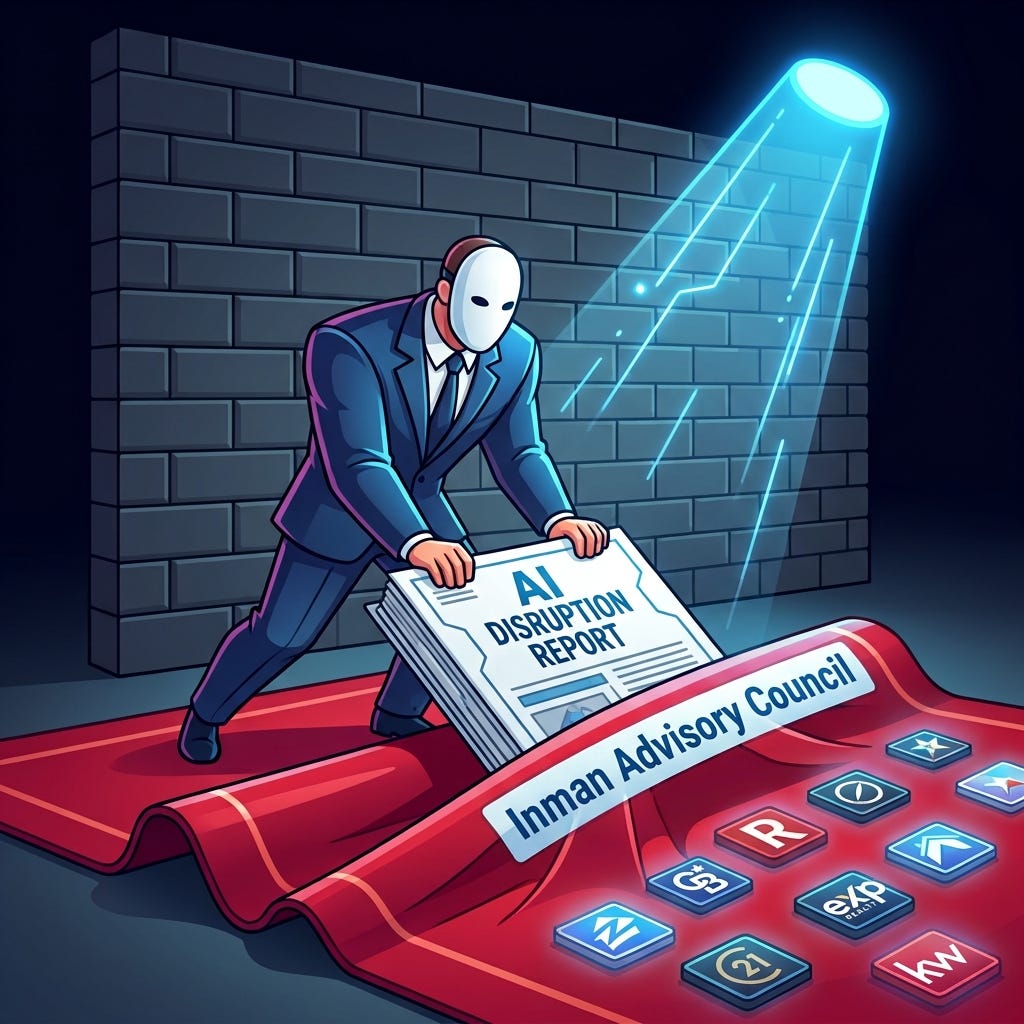
Last week, I dropped my report Organized Real Estate Struggles to Address AI Disruption noting that it has been rejected by a “major trade publication”. Today, it’s time to pull back the curtain and name names. This is the story behind Inman’s rejection of the piece, what it reveals about our broken trade media ecosystem, and an open challenge to media leaders brave enough to claim the audience Inman left behind
Too Hot to Print: The Inman Rejection
How do months of editorial engagement lead to awkward ghosting?
When I first pitched the story of my suspension and ban at CAR Monterey meeting, —where I dared to challenge the establishment on AI policy — I didn’t send in a personal grievance. I offered an analysis of organized real estate failing to govern Agentic AI. I sent a thoroughly researched look at how technological policy vacuum threatens both the industry and consumers. After an initial round of feedback, I sanitized the draft, stripping out my personal story to focus my Inman OpEd strictly on systemic AI policy matters to spark the necessary industry-wide debate
There was no response from Inman’s editorial team until this Substack went live and they realized this story could not be hushed. Then came the predictable message: “It’s just not the right fit for our audience”
Let’s be clear about what “not a fit” actually means in modern trade journalism. It means the topic is too uncomfortable. It means it disrupts a carefully curated narrative. When an industry publication refuses to print a grounded, fact-based warning about existential business risks, it isn’t protecting its audience—it is gatekeeping for the establishment and the sponsors
Inside the Echo Chamber: ICSD 2026
Anticipating rejection, I flew to San Diego on a reconnaissance mission
Walking the floor at Inman Connect San Diego (ICSD) confirmed exactly why my piece was rejected. Under its current leadership, the shifting landscape of trade media has traded its journalistic edge and public accountability for corporate comfort. Inman used to be the publication that openly asked the questions everyone else was terrified to even whisper. That fearless stance is what originally built its massive, highly engaged audience —the very audience that attracted Beringer Capital to acquire the company from Brad Inman
Today, the conference floor feels markedly different. The discourse is no longer driven by substantive, structural debate; it has been entirely colonized by PR messaging, vendor pitches, and safe scripted interviews

The low point was the new Inman CEO Tom Bohn, interviewing NAR CEO Nykia Wright, quipping about how the media is too tough on NAR and too focused on “clickbait”. When top media executives openly commiserate with institutional leaders about “clickbait” while implicitly promising softer coverage, it signals institutional rot. The event has transformed from an industry compass into a closed echo chamber where real problems are swept under a rug of glossy marketing
The Sponsor Trap: Trading Trust for Access
I co-sign the warning published by Chris Smith (ex-Inman) a couple months ago
The openly declared transformation into “Inman 2.0” highlights the fatal flaw in the legacy trade media business model: the Sponsor Trap. Legacy publications rely on the very institutions they are supposed to cover for ad dollars, event sponsorships, and insider access
This creates an invisible, toxic incentive structure. Editors don’t need to be explicitly told to censor a story; they self-censor because they intuitively know which headlines will jeopardize next quarter’s revenue — and, by extension, their own careers
By prioritizing sponsor comfort over editorial courage, publications trade away their only real long-term asset: reader trust. It is a classic case of a business shooting itself in the foot long-term to secure short-term revenue. The moment an audience realizes a publication is pulling punches to protect advertiser and institutional relationships, the underlying value of the media platform evaporates. Trust is the ultimate currency, and trade media is currently self-destructing by ignoring the tough questions

What the Real Estate Audience Is Begging For
Ask a local real estate professional if they trust vendors and institutions
The irony of this gatekeeping is that the professional audience has never been more starved for unvarnished truth. Practicing real estate professionals are living through historic industry disruptions—from tectonic commission lawsuits to rapid AI implementation. They don’t need another sanitized press release or a vendor-sponsored puff piece. They have zero trust left for corporate cheerleading
The market’s demand for “straight talk” is at an all-time high. Professionals are actively begging for voices that deconstruct industry leadership, policy failures, and technological shifts with clear, critical eyes. Because traditional trade media refuses to fulfill this demand, a massive vacuum has opened up. Audiences are migrating away from legacy gatekeepers and moving toward independent platforms, where the writing isn’t bound by sponsor handcuffs
The Open Challenge: Who Wants this Audience?
This brings us to a critical inflection point for the rest of the real estate media landscape. Inman’s retreat into safe, corporate PR has left their most valuable asset exposed. The niche of asking tough, uncomfortable questions is underserved, and the audience that comes with it is entirely up for grabs.
Now here is my open challenge to all the competing publishers, media executives, and alternative platforms (you know who you are):
The microphone is open: If your publication has the editorial teeth to host the conversations our industry actually needs, let’s talk!